

Floating Solar: A Blueprint for Vietnam’s Green Energy Future
October 28, 2025
Sigenergy Smart Energy Solutions Now Available at LenX Energy
December 15, 2025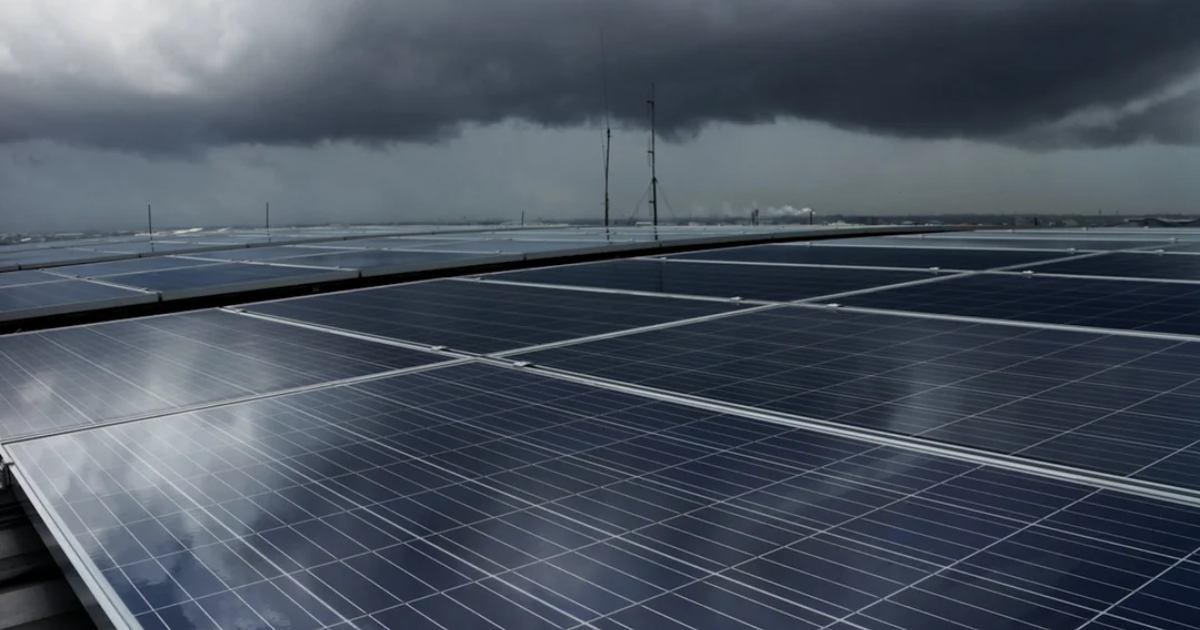
One of the most common misconceptions in Vietnam’s energy market is that “solar power is ineffective during the rainy season.” In reality, the opposite is true. Modern solar power systems do not require constant sunshine to deliver strong performance. In fact, Commercial & Industrial (C&I) solar systems in Central and Southern Vietnam continue to maintain stable output even on overcast days.
If your factory is still postponing solar installation because of the rainy season, you may be missing out on significant cost savings.
Solar Panels Do Not Require Direct Sunlight to Generate Electricity
Modern solar panels such as the LONGi Hi-MO 7/10 or Jinko 620–625 W feature advanced cell technology that allows them to absorb both direct and diffused sunlight. Clouds do not completely block sunlight; instead, they scatter it. As a result, energy production remains stable even under cloudy conditions.
Typical Output on Rainy and Cloudy Days in Central Vietnam
• 30–60% of peak capacity
• 50–70% output with high-efficiency bifacial modules
• Energy storage systems help stabilize daily output fluctuations
Simply put, your system never “drops to zero” just because the sun isn’t shining.
Vietnam’s Rainy Season Is Short Compared to Its Annual Solar Potential
Da Nang, Quang Ngai, Ho Chi Minh City, Binh Duong, and the entire Central–Southern region receive 2,000 to 2,300 sunshine hours per year. Even during the rainy season, there are frequent sunny intervals throughout the day. This is why Vietnam consistently ranks among Asia’s most promising countries for solar power development.
The rainy season only causes a slight reduction in output—far from enough to impact a project’s profitability over its 20–25 year lifespan.
Rain Actually Improves Long-Term System Performance
Rain acts as a “free cleaning cycle,” washing away dust, sea salt, and surface contaminants that accumulate during the dry season. Cleaner panels allow more light to pass through, improving overall efficiency.
Benefits of the rainy season for solar power systems:
• Increased light transmittance
• Reduced need for manual cleaning
• Optimized output immediately after the rainy season
• Lower risk of hotspot formation
In other words, the rainy season quietly prepares the system to reach peak performance during the sunny months.
Solar Delivers the Greatest Savings When the Grid Is Unstable
The rainy season is also when the following issues most commonly occur:Mùa mưa cũng là lúc thường xảy ra:
• EVN voltage drops
• Unexpected power outages
• Grid overload
• Power quality fluctuations
Solar power systems combined with battery storage help factories reduce dependence on the grid and stabilize internal power supply. Even systems without batteries can reduce grid draw and improve voltage quality for connected equipment.
For factories operating sensitive equipment, this is a significant advantage.
C&I Solar ROI Is Measured Annually — Not Seasonally
Smart CFOs focus on annual data. A solar power system in Da Nang, Quang Nam, Ho Chi Minh City, or Binh Duong can deliver:
• 13–18% reduction in electricity bills for space-constrained rooftops
• 70–85% reduction for large rooftops capable of installing 1–2.5 MWp
• 4–6 year payback period (EPC model)
• Higher ROI under EaaS / PPA models with no upfront capital expenditure
• I-REC generation to support ESG reporting
Rainy days represent only a small variable in a long-term financial equation.
Real-World Data Confirms This
LenX Energy currently operates and monitors multiple solar systems across Central Vietnam. Across all these projects, the rainy season reduces output by only 15–25%—far from enough to undermine project viability.
Meanwhile, electricity prices continue to rise year after year, while solar generation remains stable. As a result, ROI only improves over time.
Conclusion
The rainy season is not a barrier to solar power. It is simply a long-standing misconception.
Businesses that adopt solar today will benefit from:
• Hóa đơn điện thấp hơn
• Greater long-term cost control
• Stronger ESG performance
• More stable power supply
• Greater competitive advantage as electricity prices continue to rise
Waiting for “perfect weather” only delays real cost savings.
Optimized Solar Solutions for the Rainy Season
LenX Energy designs, builds, and operates solar power systems optimized for Vietnam’s climate—including TPO rooftops, complex roof structures, and large-scale industrial facilities. Whether you choose the EPC model or a zero-capex PPA / EaaS solution, we ensure long-term system stability, reliability, and performance.
Contact LenX Energy today to optimize your energy costs.
